
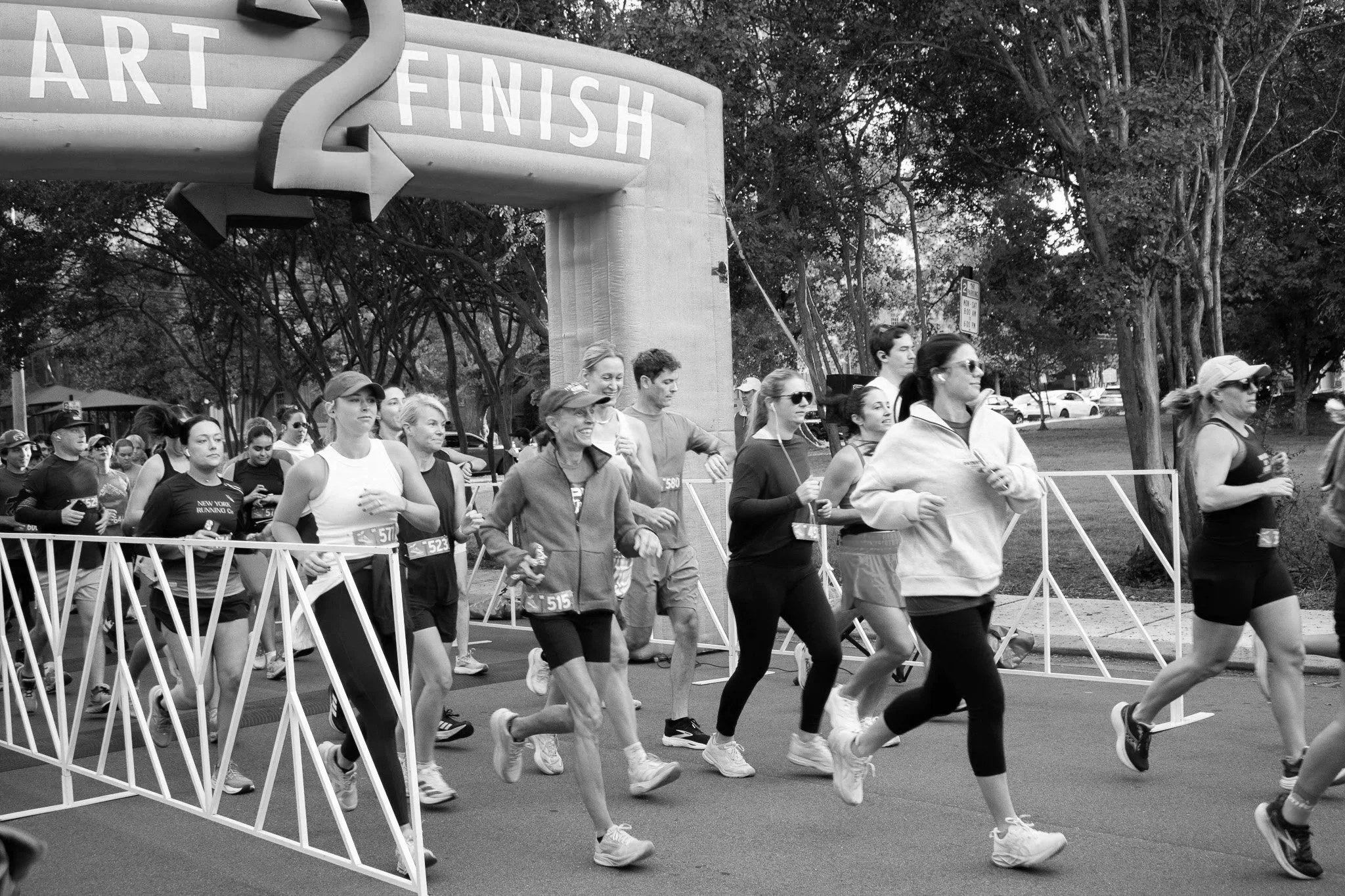
You don't just want the pain to stop.
You want to run again.
Whether you're training for your first 5K, preparing for a marathon, returning after an injury, or trying to solve pain that keeps returning every time your mileage increases, Return 2 Play evaluates both the injury and the way you run.
Running Injuries We Commonly Evaluate
-
Runner’s knee can cause pain around or behind the kneecap, especially during running, squatting, stairs, or prolonged sitting. A running-focused physical therapist can identify contributing factors and build a plan to improve strength, mobility, and running mechanics.
-
Hip pain can develop from overuse, muscle weakness, mobility restrictions, or changes in running volume. Physical therapy can help determine the source of your pain and address the underlying factors affecting your stride.
-
IT band-related pain often causes discomfort on the outside of the knee or hip, particularly during running. Treatment may focus on hip and lower-extremity strength, running mechanics, mobility, and gradually building tolerance to running.
-
Achilles tendon pain can develop when the tendon is exposed to more running load than it can currently tolerate. A structured rehabilitation program can help gradually restore calf strength, tendon capacity, and running tolerance.
-
Pain underneath the heel or through the bottom of the foot can make running uncomfortable and may worsen with increased mileage. Physical therapy can address foot and ankle strength, mobility, load management, and running mechanics to help you return to activity.
-
Shin pain is common when running volume, intensity, terrain, or frequency increases too quickly. Proper evaluation can help determine whether the pain is related to muscular overload, bone stress, or another condition and guide an appropriate return-to-running plan.
-
Hamstring strains and recurring hamstring pain can interfere with speed, distance, and confidence while running. Rehabilitation typically focuses on restoring strength and control while progressively preparing the hamstring for the demands of running.
-
Calf strains can occur when the muscle is overloaded during running, sprinting, hills, or changes in training. Physical therapy can help restore calf strength and capacity while gradually progressing you back to running.
-
Not all knee pain has the same cause, and continuing to run through pain without understanding what is contributing to it can make recovery more difficult. A physical therapist can assess your strength, mobility, movement patterns, and training load to develop an individualized plan.
-
Running-related overuse injuries often develop when training load increases faster than your body can adapt. Physical therapy can help identify the factors contributing to the injury while building your capacity to handle the demands of your running goals.
-
Getting back to running after surgery requires more than simply waiting for pain to go away. A progressive rehabilitation plan can help rebuild strength, mobility, impact tolerance, and confidence before you return to your previous running volume.
-
Returning to running after pregnancy should be a gradual process that accounts for changes in strength, pelvic floor function, core control, and overall load tolerance. A postpartum physical therapist can help you safely progress from foundational strength and impact exercises back to running.
What a Running Evaluation Looks At
Running is more than simply putting one foot in front of the other. Your training history, strength, mobility, running mechanics, recovery, footwear, and weekly mileage can all influence how your body responds to running.
At Return 2 Play, a running-focused physical therapy evaluation looks beyond the location of your pain. We work to understand why your symptoms developed, what your body needs to tolerate running, and what it will take to get you back to your goals.
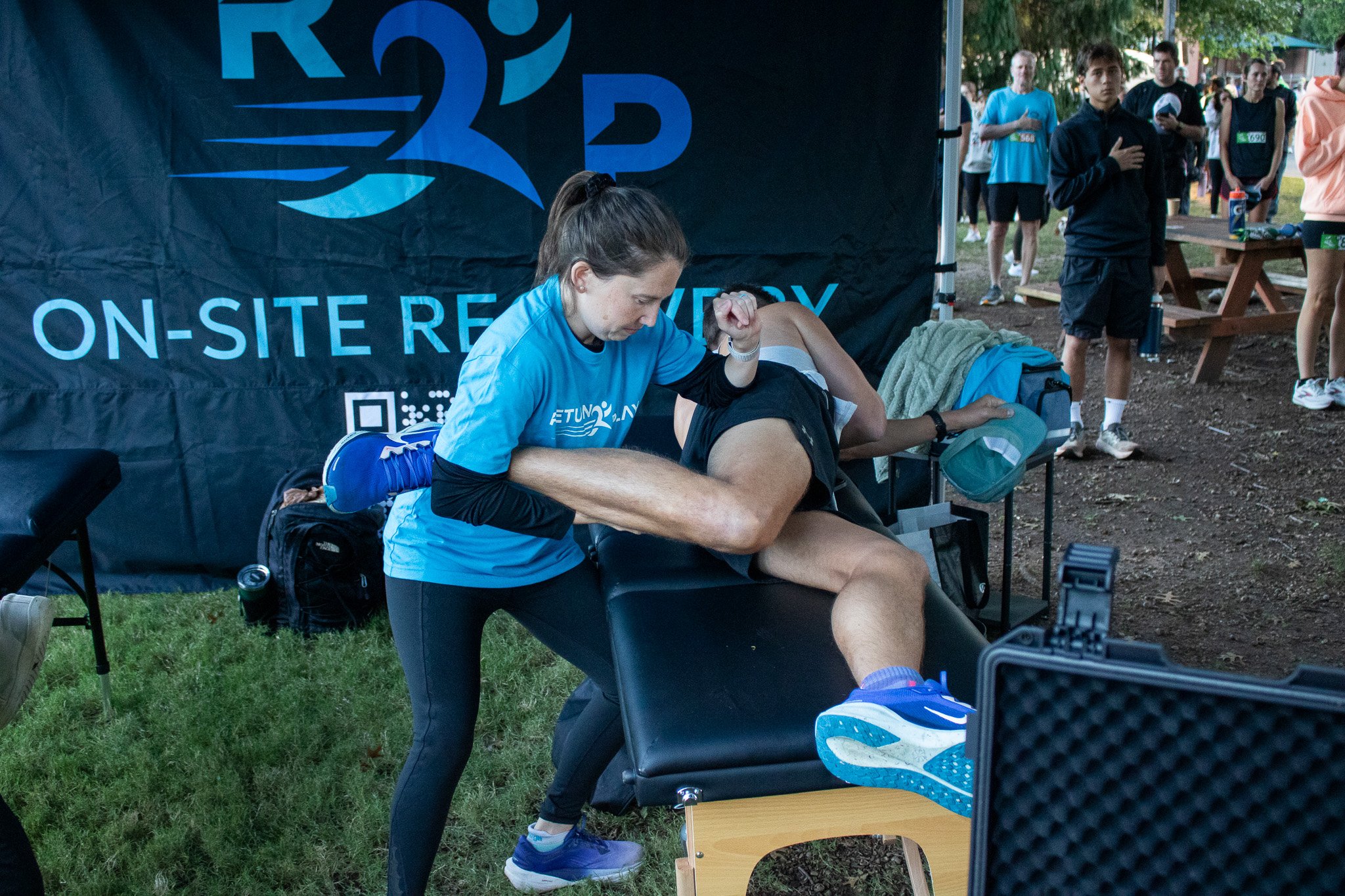
Your evaluation is individualized to your symptoms, training, and goals. Depending on your needs, your physical therapist may assess:

| Evaluation Area | What We’re Looking At |
|---|---|
| Injury & Training History | Previous injuries, surgeries, symptoms, and your running background. |
| Weekly Mileage | Current running volume, frequency, long runs, and intensity. |
| Recent Training Changes | Changes in mileage, pace, hills, terrain, or race preparation. |
| Strength & Mobility | Feet, ankles, calves, knees, hips, and core. |
| Running Mechanics | Movement patterns and factors relevant to your symptoms and goals. |
| Video Analysis | A closer look at running mechanics when appropriate. |
| Footwear & Environment | Shoes, surfaces, terrain, and other relevant training factors. |
| Pain Response | When symptoms occur and how they respond during and after running. |
| Goals & Upcoming Races | Your performance goals, upcoming races, and desired timeline. |
| Return-to-Running Plan | A progressive strategy to safely build running volume and intensity. |